





Pioneering New Horizons in Literature and Locality: The 3rd Ying Qianli Literature & Adaptation Competition

▲The awards ceremony of the "Gabriel Ying Literature X Adaptation Competition" was held on March 28 at the Department of Foreign Languages and Literatures, NTU. (Photo by Huang Po-hsun)
The 3rd Gabriel Ying Literature X Adaptation Competition, commissioned by the Gabriel Ying Scholarship Board and co-organized by the Department of Foreign Languages and Literatures at National Taiwan University (NTU) and the College of Foreign Languages at Fu Jen Catholic University (FJCU), concluded with an awards ceremony on March 28 at the NTU Humanities Building. This year’s competition saw enthusiastic participation from students of both universities. After two rigorous rounds of judging, 11 awards—including Excellence, Merit, and Honorable Mention—were presented to talented students from NTU’s Department of Foreign Languages and Literatures, as well as FJCU’s Departments of English (Extension Site), French, and Spanish. In an era dominated by AI, these students demonstrated exceptional linguistic proficiency, creativity, and teamwork by adapting literary classics and local history through cross-media platforms, making literature resonate with contemporary social issues and revitalizing local cultural heritage.
Evolution of Creativity: Diverse and Multimodal Re-interpretations
The winning entries spanned a wide range of subjects, from Western literary classics such as T.S. Eliot’s Murder in the Cathedral, Gustave Flaubert’s Memoirs of a Madman, Baudelaire’s poetry, Greek mythology, and English verse, to local Taiwanese history, including the tea trade, the labor memories of female tea sorters in Dadaocheng, and the urban culture of Kaohsiung. In terms of format, the Video Category featured hand-drawn and AI-collaborative animations, experimental films, and narrative shorts. The Non-Video Category showcased physical exhibitions such as journals, newspapers, and sailing-themed board games, alongside interactive websites, games, and transmedia storytelling. These works not only demonstrated the students' deep understanding of the original texts but also showcased their ability to give literature and history a modern voice through media innovation.
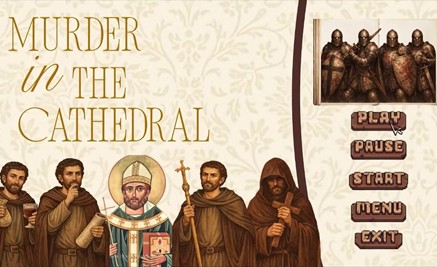
▲"Murder in the Cathedral BE (Bad End)" reconstructs T.S. Eliot’s verse drama as an interactive game. (By Hong Wen-xin & Hsu Chih-han, NTU)
From Classics to Games: Immersive Narrative Experiments in the Video Category
The Excellence Award in the Video Category was presented to "Literature Adaptation Project: Murder in the Cathedral BE (Bad End) Gameplay Walkthrough." This project broke away from traditional filmmaking by transforming T.S. Eliot’s verse drama into an interactive game. Viewers experience "choices" and "consequences" firsthand, vividly illustrating the ethical struggles and fatalistic tension within the characters, thereby opening a new path for literary adaptation.
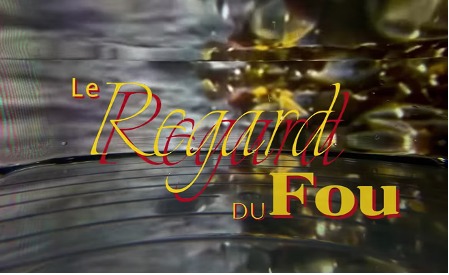
▲"Le Regard du Fou" uses fluid colors and abstract imagery to present the tension of the text. (By Chang Chen-hao, Tan Hou-ming & Yang Wan-hua, FJCU)
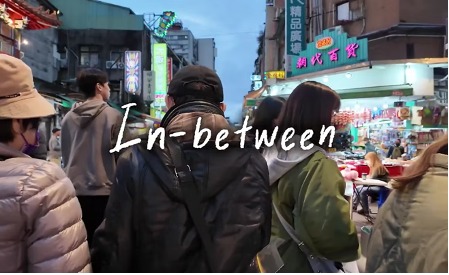
▲"In-between" depicts the struggle of immigrant identity in contemporary society. (By Fan Ting-ya, FJCU)
The Merit Award winning work "Le Regard du Fou" utilized fluid colors and liquid imagery to construct a visual flow of emotions, while "In-between" combined the immigrant experience with poetic narrative to explore the fluidity of identity. Both works exhibited a high degree of experimental fusion between text and image. Other notable works included "The Rise of Hermes," which integrated AI animation with mythology, and "Mémoires d’un fou," a hand-drawn animation extending Flaubert’s text into a modern context.
Cross-Media Practice: Reconstructing Experience in the Non-Video Category
The Non-Video Category drew inspiration from diverse sources, ranging from Greek mythology to the history of Dihua Street. The Excellence Award winner "Zeus’s Lover Search Game" featured exquisite animation and charming character designs, allowing players to learn about the complex relationships in Greek mythology through gameplay. Another Excellence Award winner, "Boarding the Formosa Fong Chun," was inspired by a 19th-century certificate from Paris found in the Sin Fong Chun Tea Shop. It utilized gamification—including nautical maps and model ships—to transform the history of the Taiwanese tea trade into an experiential knowledge system.
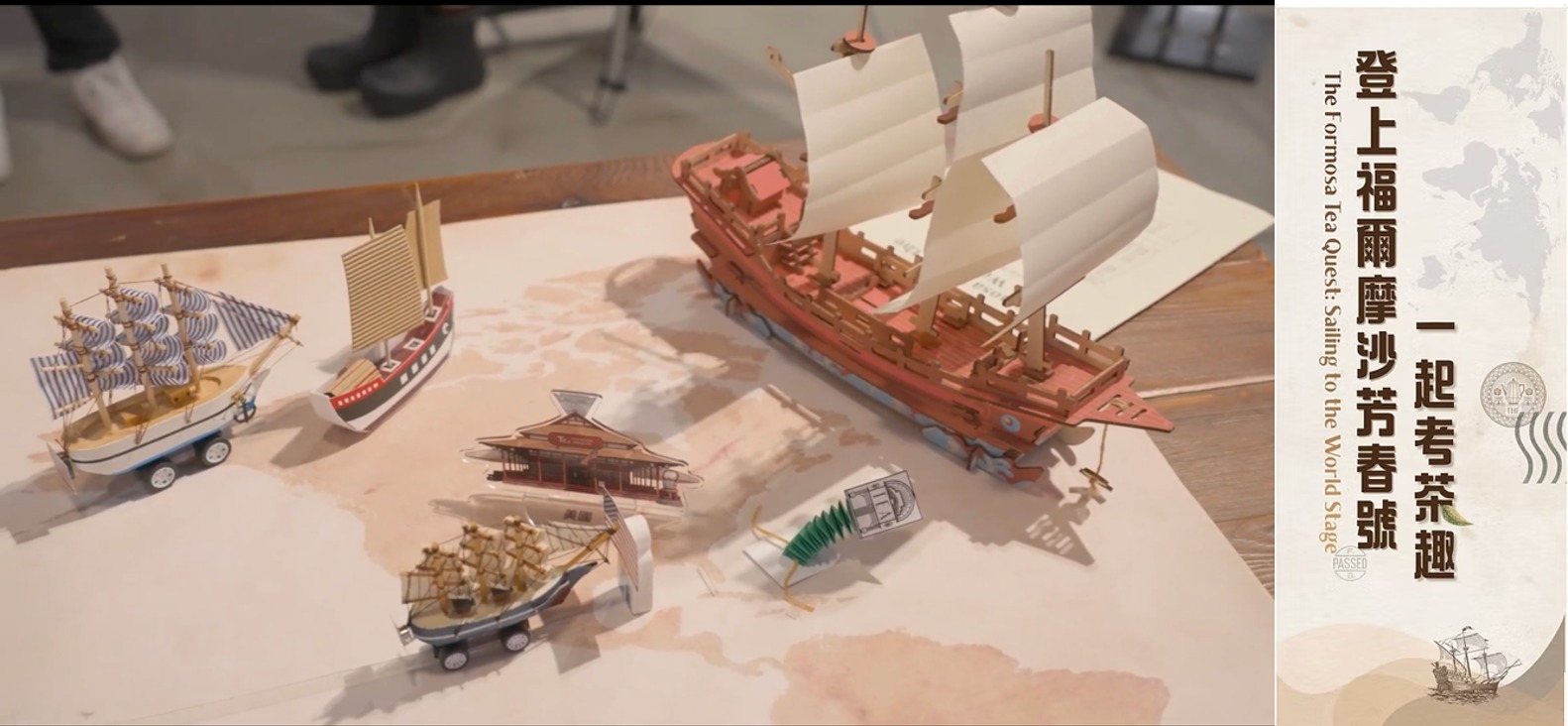
▲"Boarding the Formosa Fong Chun" leads viewers into the history of Taiwan's tea trade through gamified storytelling. (By FJCU English Extension team)
The Merit Award work "Before Being Seen" used a physical exhibition and handmade books to recreate the historical memories of women in the Dadaocheng tea industry, blending cultural depth with aesthetic design. Other projects, such as "Resonance Across the Seas," brought English poetic imagery into the urban spaces of Kaohsiung, fostering a cross-cultural dialogue.
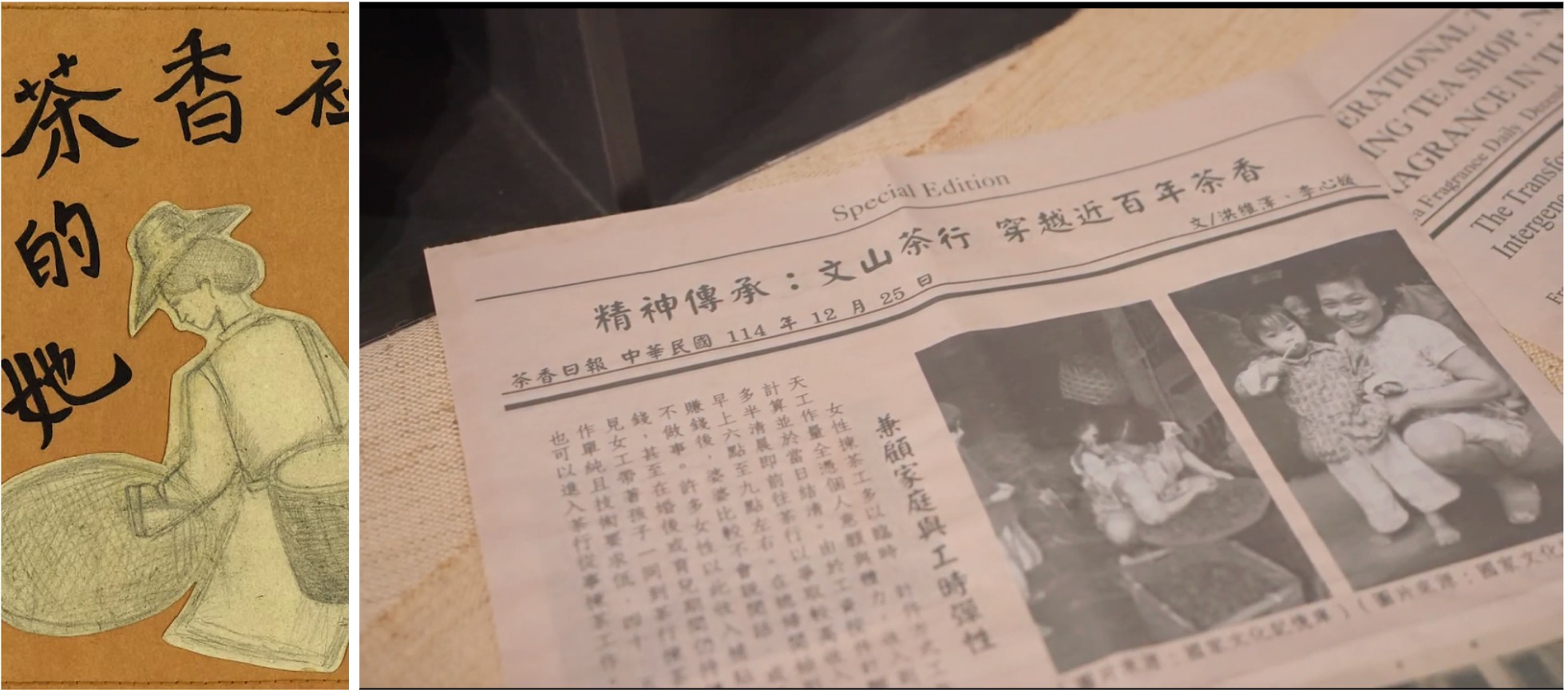
▲"Before Being Seen" recreates the historical role of women in the tea industry through a physical exhibition. (By FJCU English Extension team)
The Future Language of Culture: A New Generation of Interpreters
The awards ceremony featured touching remarks from both faculty and students. Chairman Chiou Jin-rong warmly referred to the students as "children," noting the presence of families supporting the young awardees. In their acceptance speeches, students expressed gratitude to their mentors for guiding them into the world of literary adaptation, while also thanking their teammates for the emotional growth experienced during collaboration. One student, who transitioned from Medicine to Foreign Languages, poignantly compared "adaptation" to "transcription" in biology—the process of transferring genetic information from DNA to RNA.
The success of the 3rd Gabriel Ying Literature X Adaptation Competition highlights a profound engagement with humanistic values. Whether through games, films, or interactive exhibitions, these students have proven that literature remains a vital and evolving force in the modern world.